

My story was written for me. I am still learning to write it myself.
Pooja Pyakurel grew up in Bal Mandir, a children's home in Kathmandu. She has been doing this work for eight years, and registered Bhagya Nepal two years ago to make it formal. This is her story, in her words.
“Where other children wrote their parents' names, I wrote the name of a building.”
Every school diary had the same three printed lines. In each of mine, I wrote the name of the children's home. When the teacher read it aloud, the class laughed. I was small enough that I didn't understand why — only that a line meant for a person had a place in it instead.
I couldn't write well yet. But my fate had already been written for me.
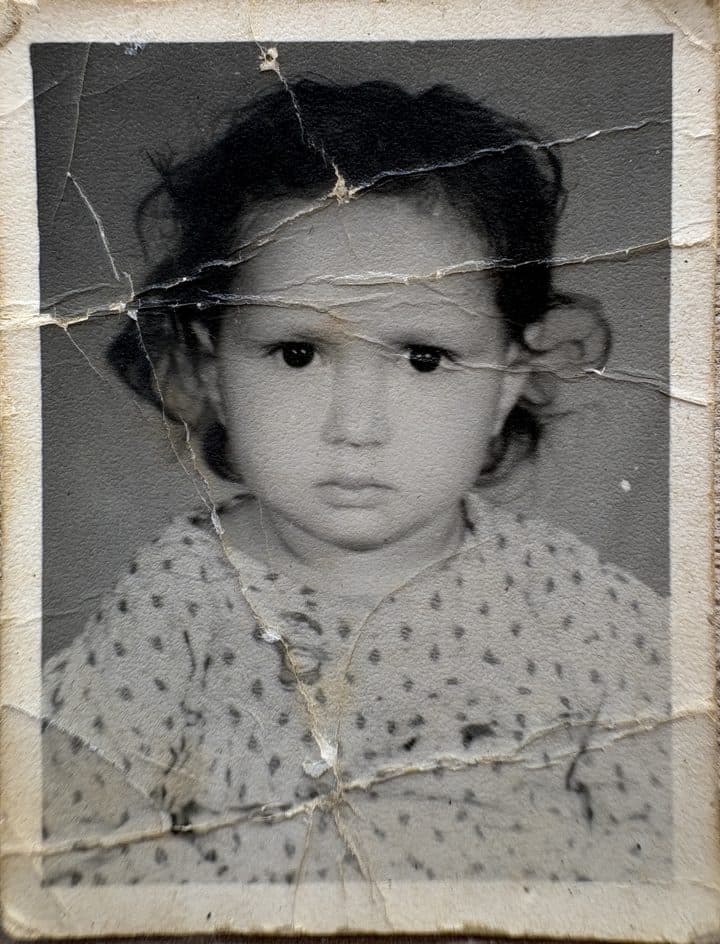
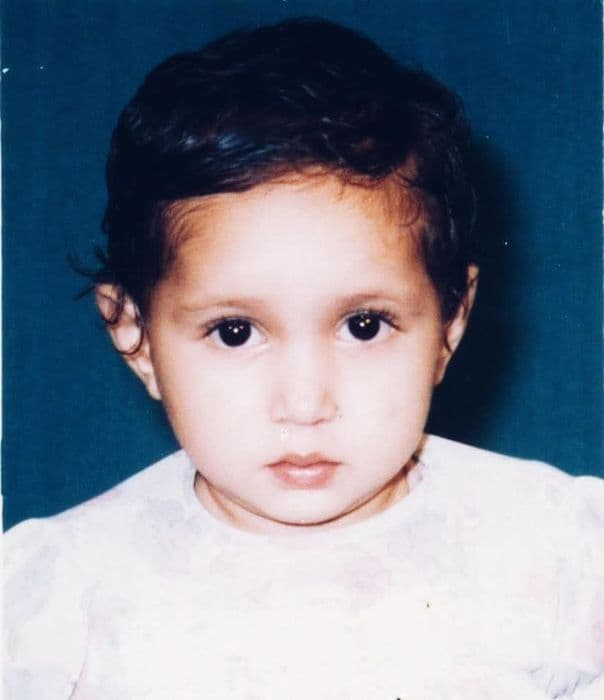
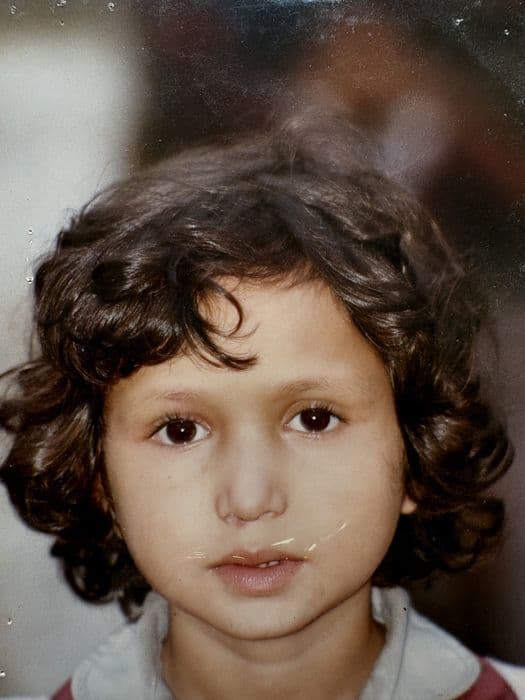
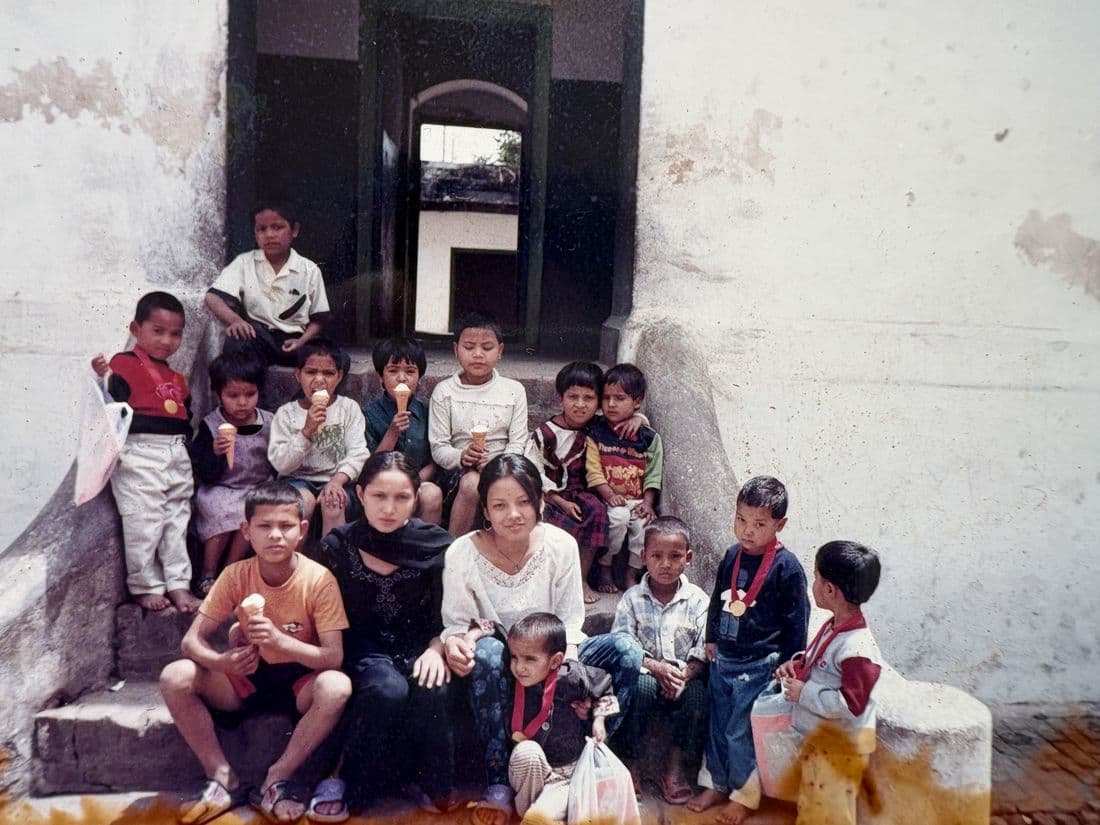
A childhood, as it was photographed.
These are almost the only photographs Pooja has from her years at Bal Mandir, kept all this time in a scrapbook.
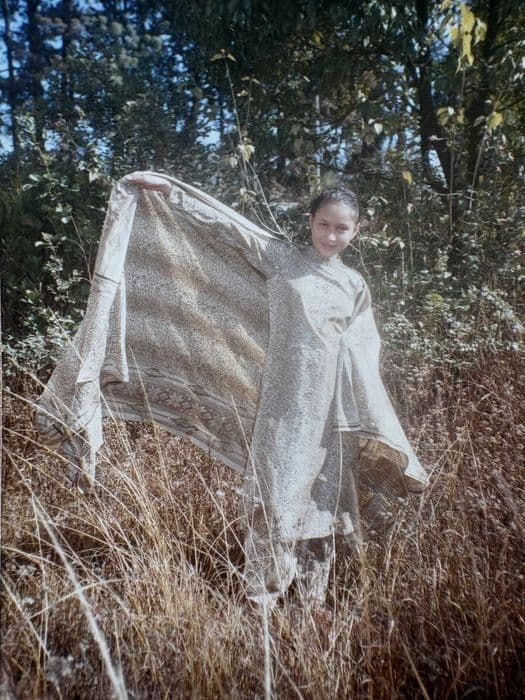
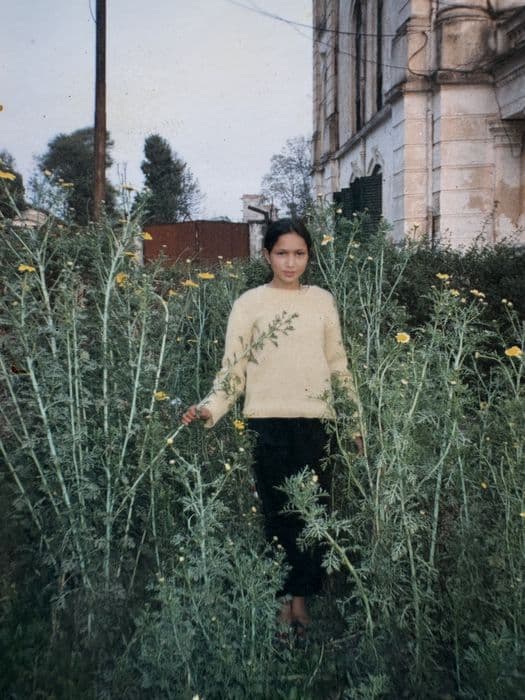
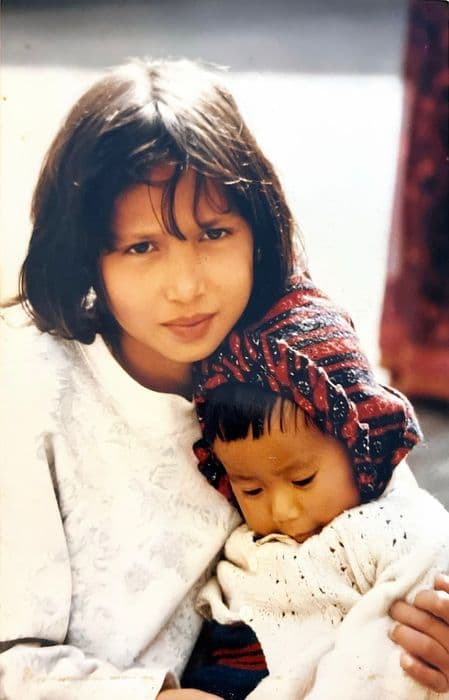
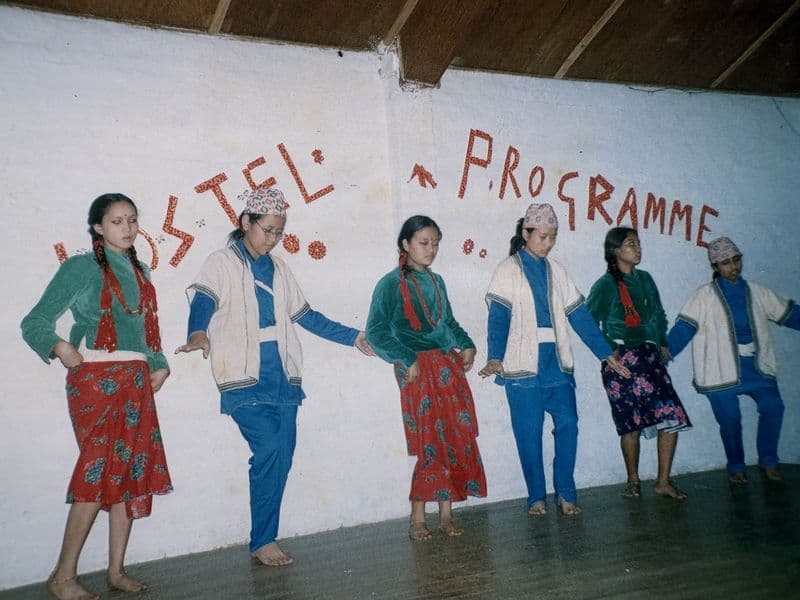
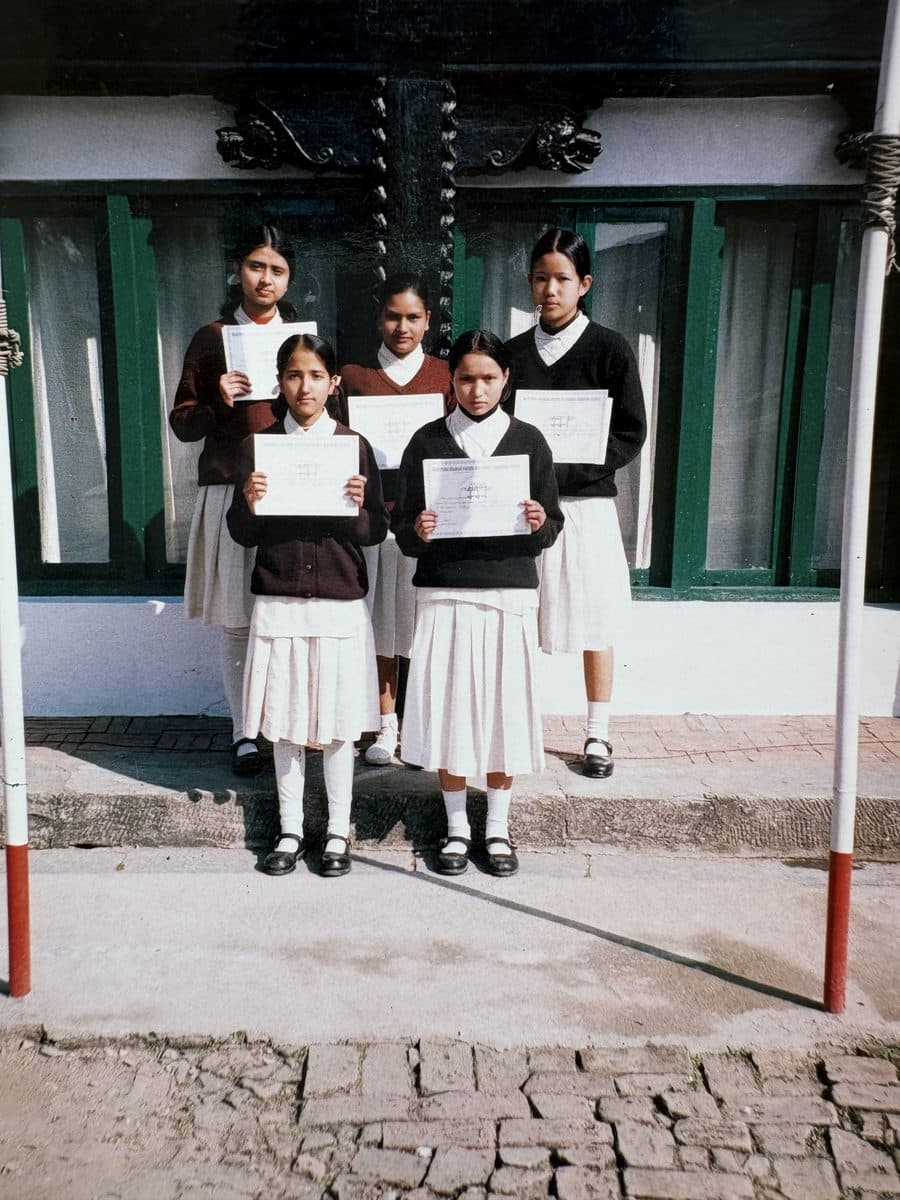
A classroom was the one door that stayed open.
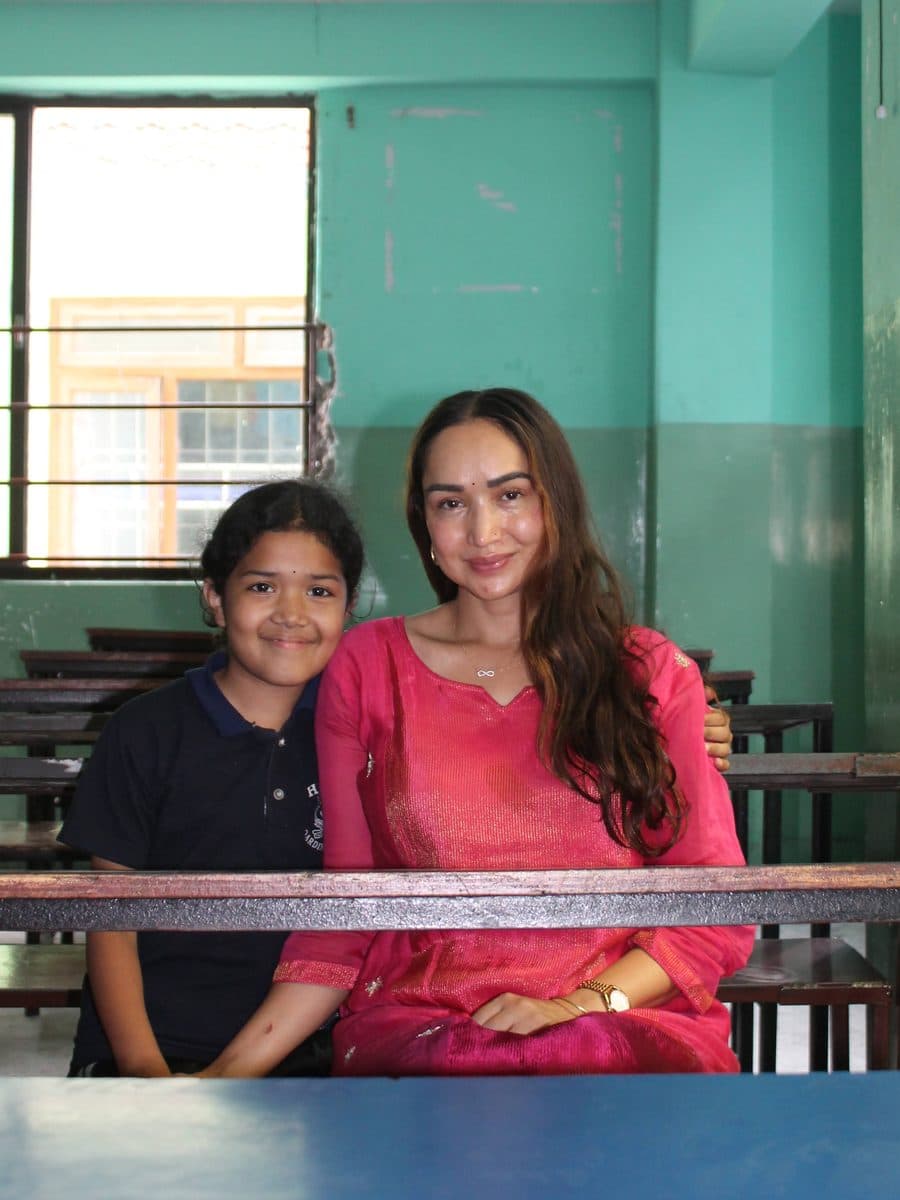
I was fortunate. I was given a good education by good people — people who supported my schooling, and made sure I had a place in a good school and the chance to stay in it.
Many children around me were not given that. I have never taken it lightly. Everything I have built since started at a desk.
“School was the first place where I was measured by what I did, not by where I came from.”
Nobody to ask the question for me.
At my own school, I always placed first in running. But when it was time for the inter-school competition, I was denied entry to the race — I didn't have sports shoes.
Nobody argued. Nobody went looking for a pair. No one meant any harm. There was simply no one whose job it was to notice.
“I didn't need someone to run for me. I needed someone to say: she runs.”
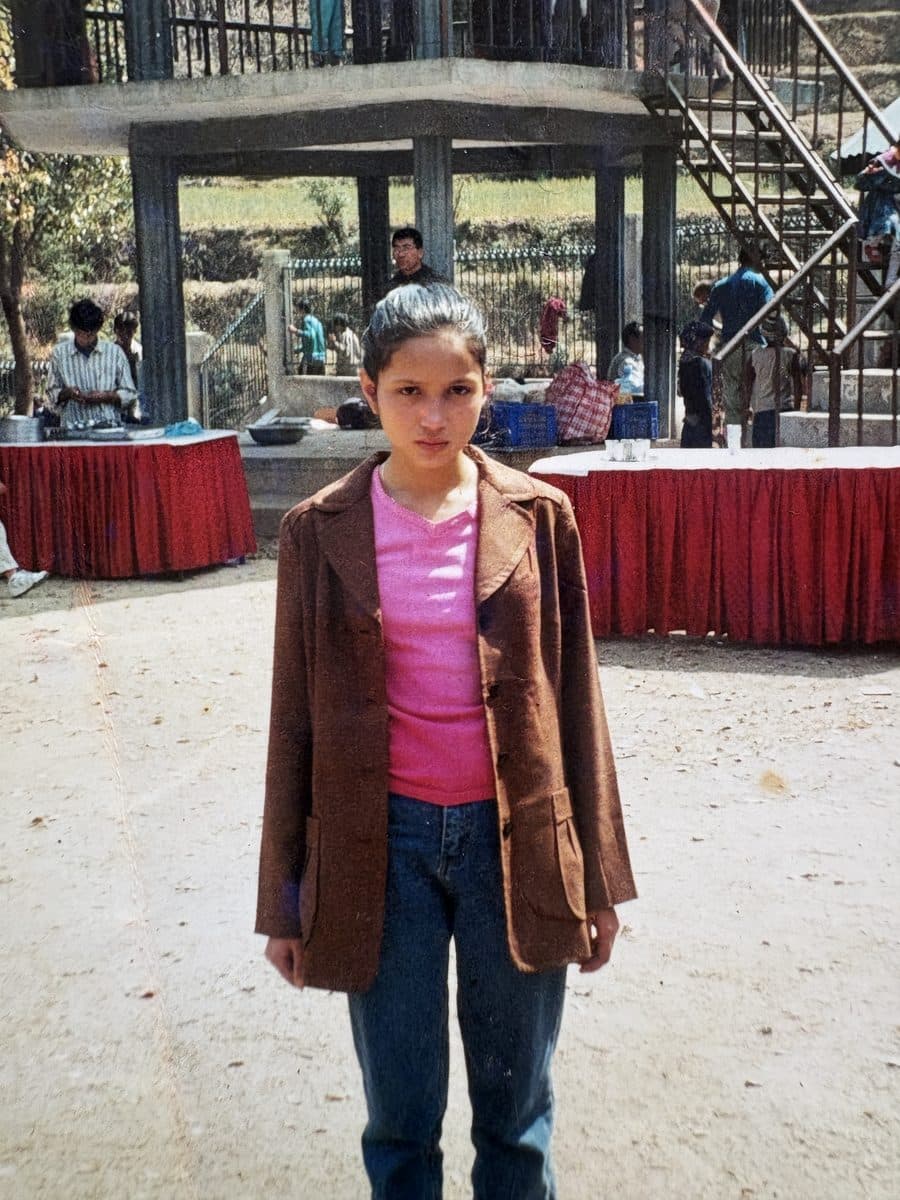
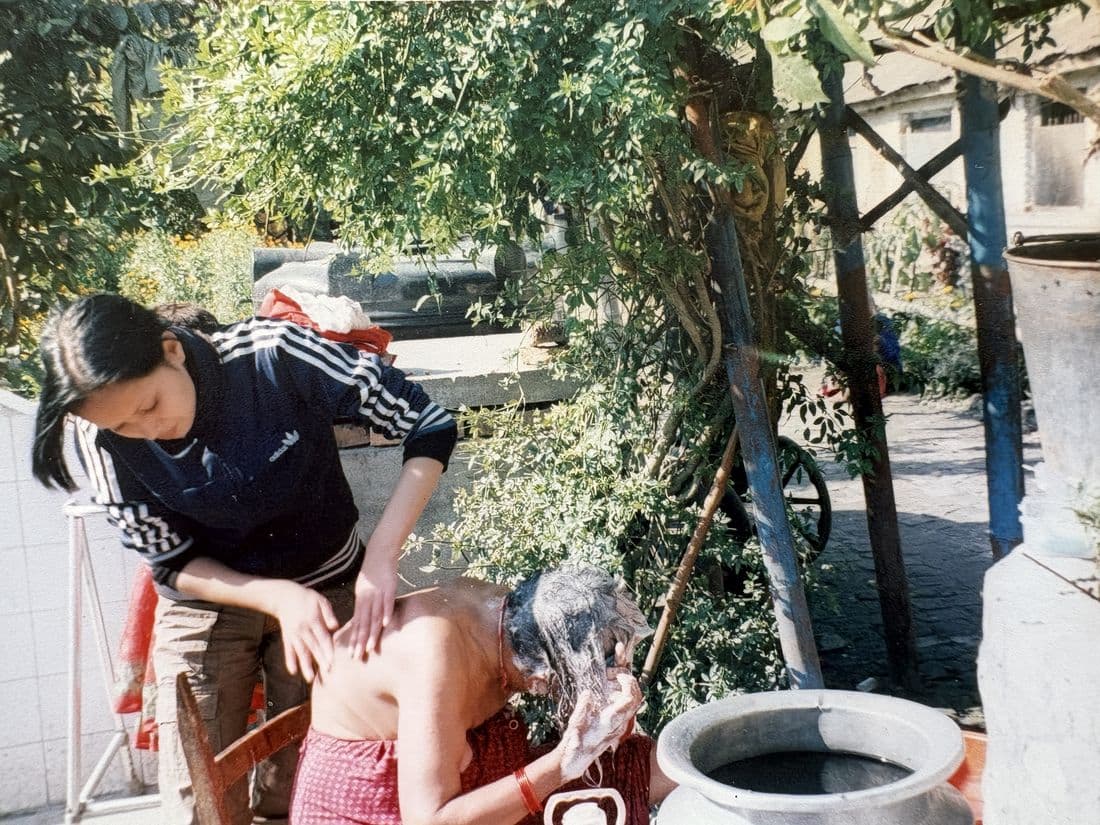
One foot in front of the other.
After grade ten, while others in my class waited, I went looking for work. A travel agency gave me my first job.
On the first morning I stepped out through the gates of Bal Mandir alone, and realised I didn't know the way. The fear was immense. But there was nothing to do except put one foot in front of the other — and somewhere on that walk, something intrepid in me began to bud.
When my first salary came, I gave it to someone who needed it more than I did.
“I made every one of those decisions alone. Some were right, some were wrong, and some were luck.”
Every form still asks for a name.
As a child, my school diary asked for a father, a mother, a guardian. As an adult, the forms ask for next of kin. Emergency contact. Relationship to you.
I have built a good life — a career I'm proud of, and friendships that run deep, with people who love me and whom I love. And still, I pause at that line.
When I fall ill, I wonder who would notice. If I had to get to a hospital in the night, I wonder whose number I would call — and whether it would be fair to call it. Most people never have to ask who their family is. I am still answering that question. Family, for me, was never something I was born into. It is the people I chose, and who chose me back.
“The hardship ends. The aloneness doesn't. I want every child we walk alongside to have a name to write on that line.”
“Opportunity alone was not enough. I needed attitude. I needed guidance. I needed support, and I needed luck — and I didn't always have them. If I had been guided better, perhaps things would have been better.”
Someone opened a door for me. Then I walked through it alone.
I had the school. What I didn't have was someone who stayed — someone to argue for a pair of shoes, to walk me to the end of the street, to tell me which decisions mattered. I found my way, but more of it was luck than I like to admit.
I always wanted to give back. My finances were not always strong, but I found a way — and I kept finding one. What I found by chance, the children I can reach should be able to count on.
Education
Every child we work with is in a classroom — and kept there, year after year.
Mentorship
An adult who knows their name, and asks the question nobody asked for me.
Sustained guidance
Someone still there after school ends — through first jobs, first setbacks, first decisions.
So that is what we do. We make sure a child is in school, and stays there. We give them an adult who knows their name and notices what no one else does. And when school ends, we don't. We stay — through the first job, the first setback, the first time they step out through a gate on their own.
Pooja’s fate was written for her. Help a child rewrite theirs.
What Pooja found by luck, a child should be able to count on: school, guidance, and someone who stays.
Give now